

Battlefield 6 arrives with a simple promise: put the franchise back where it belongs, at the top of sandbox shooters. The release date sits close enough that community expectations are already boiling over, and for good reason. After the missteps of 2042, there was no appetite for excuses. Electronic Arts assembled its largest Battlefield crew yet, with DICE steering the vision and partner studios handling content throughput, live balance, and network infrastructure. The result is a return to the old strengths that built the brand: large-scale warfare, squad utility that actually matters, environmental destruction that shapes fights, and a tactile weapon model that rewards smart positioning. It is not nostalgia for nostalgia’s sake. The DNA from BF3 and BF4 is present, then tuned with modern expectations around responsiveness, readability, and performance on PlayStation, Xbox, and PC.
The competitive backdrop matters here. A new Call of Duty is always circling, and Activision can flip the hype switch on a dime. Yet the vibe around this launch feels different. This Battlefield runs on Frostbite with obvious visual upgrades, yes, but the bigger story is momentum: movement mechanics that let infantry stay alive longer without feeling arcade, vehicles that hit the right weight class, and a firm cap at 64 players that keeps chaos readable. Pre-release sessions came with constraints that shape early impressions. Access windows limited time in certain modes, gear unlocks were not complete, and Portal was not available ahead of launch. That said, the core loop already lands with authority. The series needed clarity. It now has it.
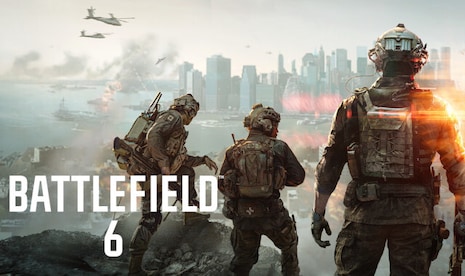
Battlefield 6 Review: Legacy, Context, and the Return to Form
Franchise heritage is not a slogan in this case. The Battlefield name earned its place by mixing expansive maps, vehicle sandbox decision making, and squad roles that carve out meaningful jobs for every player. Over two decades, that formula took a few detours. 2042 stretched the scale, diluted class identity, and ran headfirst into technical turbulence. Battlefield 6 pivots back to what worked while modernizing the friction points that made older titles feel clunky today. The development approach is pragmatic: bring back the four classic classes, tighten player counts to 64 for ground wars that breathe, and build maps that favor distinct lanes over endless running between objectives.
The strategic goal from Electronic Arts and DICE is easy to read: win back lapsed fans without scaring off new players that expect quick feedback and clear UI cues. That is why the gun handling sits in a sweet spot. Recoil is meaningful, bullet snap is punchy, and damage feedback avoids the floaty sensation that alienated parts of the community in the last cycle. It also explains the new movement toolset. Crouch-sprint lets operators link positions fluidly, the dive to prone offers emergency survivability, and a true 360-degree aiming window while prone prevents the turtle effect. Players can peek from cover with a mounted posture that trades mobility for stability. Dragging downed teammates into safety changes revive calculus in a way that feels cinematic and useful.
The broader market context in 2025 adds pressure and opportunity. Arena shooters ebb and flow, but big-budget military FPS exists in a constant tug-of-war with Call of Duty. One offers immediacy, the other scale. With Battlefield 6, scale returns with restraint. That restraint is visible in the playlist curation at launch, including a headliner mode built around territory control momentum and a set of maps that strike a deliberate balance between urban density and open sightlines. It is not a museum exhibit of prior glory. It is a practical rebuild that restores Battlefield identity.
Distribution and platform polish matter just as much as mechanics. Launching on both Steam and the Origin backed EA App ensures wide reach. Cross-play options are present, with performance targets that honor high refresh PC hardware while delivering stable 60 fps modes on consoles. Server tick, hit registration, and anti-cheat are still the long game. Early network performance felt stable in closed windows, and a deeper look at traffic behavior and netcode adjustments can be found in our detailed network test that tracked engagement timings and packet loss across multiple regions.
Here is the bottom line of this chapter: Battlefield 6 understands why people fell in love with the series. It respects that history, then trims the fat and doubles down on the meat. That is the tone setter for the rest of the experience.
Battlefield 6 Review: Multiplayer Gameplay, Modes, Maps, and Gunfeel
If the heart of any Battlefield is its multiplayer, the pulse here is strong. The first surprise is pacing. With 64-player caps, the action compresses into readable fronts, which brings back the cadence of push, counterpush, and flank that made classic Conquest shine. Movement changes unlock more agency without turning firefights into slide-spam carnival rides. Crouch-sprint links cover in a way that keeps hitboxes honest, and the new dive to prone creates a last-ditch play that can save a revive chain. A mounted peek system lets defenders post up on a window, trade some mobility for accuracy, then bail before being pre-naded.
Classes return, and that single decision cascades into better team structure. Assault is the spear tip, Engineer handles armor control, Support keeps squads alive, and Recon scouts and sets tempo from distance. Class-only gadgets are back, which forces real choices. Engineers bring serious anti-vehicle options, Supports can throw up portable cover that blocks lines temporarily, and Assault gets deployable ladders that open new roof entries. Weapons are not hard-locked by class unless a curated playlist is selected, but using the signature weapon of a class unlocks a focused perk. For Assault, faster ready speed after a sprint changes how aggressively corners can be taken. That single perk redefines entry timing on cramped lanes.
Tactical Paths layer nuance on top. Each class starts with two sub-paths that alter passive bonuses as points are earned in the round. Incursion for Assault pushes into risk-reward territory with an extra grenade and 15 percent faster reloads on certain platforms. Vanguard leans on survivability, boosting regen by 50 percent and cutting fall damage. These modifiers shape behavior without skewing time to kill beyond recognition. They also tie into a challenge-based progression system that feeds unlocks for sub-paths, gadgets, and cosmetics. It takes real playtime, but grind targets are not absurd. The design leans into mastery rather than mindless XP farming.
Maps carry the other half of the load. Launch includes eight large-scale locations and one tight close-quarters arena. Four lean urban, four lean open. City maps compress armor access and emphasize sightline control through windows, alleys, and rooftops. Rural maps give vehicles more room to breathe and set the stage for longer flanking maneuvers. The variety is smart. A two-lane avenue with cascading choke points can shift into a parkland edge where Recon players punish careless rotations. That swing keeps Conquest fresh and makes the new momentum mode sing.
The new staple is Expansion. The rules riff on Conquest: multiple capture zones across a large playspace and a shared ticket system. Differences matter. Rounds play out in three phases, majority control shuts off the losing side’s point accumulation, and one capture zone disappears between phases. That single disappearing objective forces teams to rethink geometry every time. Squads that over-invest in a now-retired zone must scramble, and the most organized units thrive under that pressure. It is the kind of mode that makes highlight reels without scripting them. The suspense at 12 percent ticket differential, clock bleeding, and a last-second neutralize is pure Battlefield.
There are cracks, and they are worth calling out. Breakthrough and Rush can tilt into meat grinders on certain slices. Wide-open lanes let defenders farm from safety, while other sectors choke the fight into a box with 20 bodies staring at a single doorway. Armor density in some defensive zones makes captures feel mathematically impossible when coordination is low. Shotgun range stands out as slightly over-tuned as well. These are fixable issues. The map system repurposes parts of large spaces into mode-specific slices. Some slices will never sing without rework. Early balance patches will need to treat those areas like triage patients, not edge cases.
Vehicles feel weighty without being sluggish. Tanks earn their intimidation. A well-placed sabot ending an enemy push is still one of the great dopamine hits in shooters. Helicopters remain a high-skill investment. Many will appreciate the optional hover-assist that lets the aircraft hold a soft glide when inputs stop. It lowers the floor while preserving the ceiling. That is a fair compromise. Air dominance still requires map awareness and aim discipline.
Guns deserve one more note. The series has flirted with spiky time to kill or floaty recoil. Here the balance lands. Weapon feedback is crisp, muzzle climb patterns are learnable, and attachments open role shifts without turning every platform into the same laser. Using the class-favored gun feels right. Ditching the tactical sprint, on paper, sounds like a loss of speed. In practice, removing that button-mashing tax makes movement more readable and firefights less coin-flippy.
For a direct pulse on moment-to-moment play, this piece comparing the competitive field is worth a read: Call of Duty vs Battlefield 6. The takeaway aligns with play sessions here: COD brings immediacy, Battlefield brings sandbox drama. Different highs, complementary audiences.
One cautionary note before moving on. Early review access came in fixed windows, and Portal was not enabled pre-launch, so long-tail balance will evolve. That said, the core loop already makes squads talk, mark, and adjust. That alone is a signal of health.
Battlefield 6 Review: Technical Performance, Graphics, Audio, and Optimization
Visual presentation is the headline grabber, and the Frostbite implementation here earns it. Volumetric lighting cuts through smoke in a way that reads immediately, building interiors show material variety under dynamic shadows, and particle work sells explosions without turning the screen into unreadable bloom. When a street market erupts under tank fire, cloth, splinters, and dust mix into a single image that holds together. The audio team matches that ambition. LFE-heavy armor cracks, metallic ricochet tails, and bullet whips give directional clarity. Headsets and soundbars both benefit. It is a layered soundscape that helps players parse danger instead of just hyping it.
Destruction returns as a visible pillar. Expectations need calibration. This is not fully systemic everything-goes collapse. Walls punch through, facades crumble, sandbags disintegrate, and certain rooftops can be compromised. Some structures are stubborn. That is a design choice to keep levels functional across long matches. Tactically, destruction creates temporary angles and denies cover more than it levels maps into parking lots. It adds to the spectacle and occasionally flips a hold. There will be moments of disappointment, like shooting a beam that will not budge, especially after promotional material teased ambitious set-piece crumbling. Consider it a step forward from recent entries, not a return to Bad Company 2 style wholesale demolition.
Performance across platforms is competent and often excellent. On a high-end PC with a recent flagship GPU, 1440p Ultra settings produced frame rates ranging from 118 to 144 fps in Conquest with heavy chaos, with dips to 104 fps during smoke-saturated artillery phases. That range was observed with balanced upscaling and motion blur disabled. Mid-range cards at 1080p High landed in the 78 to 110 fps range in similar conditions. Console targets are sensible. PlayStation 5 and Xbox Series X run a quality mode at 60 fps with high effects density and a performance mode that chases 120 Hz on capable displays, typically holding between 96 and 120 fps depending on map and player count, using dynamic resolution to protect frame-time stability. Series S aims at 60 fps with trimmed effects and dynamic 1080p.
Network stability in test windows was solid, with consistent hit registration and predictable latency curves. That is a necessary foundation for large-scale fights where desync ruins hero plays. A deeper dive into render resolution behavior, frame pacing, and HDR tone mapping sits here for those chasing settings nirvana: graphics tech analysis for Battlefield 6. PC players looking to squeeze free frames without tanking visual clarity can also grab the performance tuning guide that details CPU affinity and streaming budgets specific to Frostbite.
Engine quirks do exist. A handful of collision snags pushed players into odd geometry near stair railings, a scoreboard panel failed to populate once after a long session, and a rare black-cone artifact appeared in the center of the screen in one match. Those are the types of issues that typically receive early hotfix attention. The destructive sync stayed in lockstep enough that debris piles did not desync across clients, which historically has been a Battlefield pain point.
On storefronts, the build parity between Steam and the Origin backed EA App looked intact in the pre-release window. Patch cadence and fast rollbacks will be the real test once millions are playing simultaneously. For console owners planning to use 120 Hz modes, setup tips and HDMI quirks are covered in this practical high-refresh console guide. It saves a lot of head-scratching when VRR handshakes refuse to cooperate.
The immediate takeaway: Battlefield 6 marries spectacle with stability better than recent entries. It still has edge cases and rare bugs, but the baseline is strong enough to recommend high-refresh play where possible.
Battlefield 6 Review: Campaign, Narrative Beats, and Single-Player Value
The solo slice often gets treated like a tutorial with extra steps in military shooters. Battlefield 6 tries to do more, then lands somewhere in the middle. The structure spans nine missions over roughly 5 to 6 hours, bouncing between Gibraltar, New York, Cairo, and more. The premise centers on Dagger 1-3, an elite American unit trying to choke off a private military syndicate called Pax Armata. That setup enables diverse biomes and a clean canvas for set pieces. A nighttime infiltration in tight urban corridors morphs into a sunlit rooftop extraction that leans on ziplines and ladders. A convoy ambush under a dusty sky plays up particle work and the ferocity of armor strikes. The campaign works best when it lets the sandbox breathe for a minute.
Character work never gets enough oxygen. Scenes feel like quick beats designed to kick players into the next arena. Motives read as archetypes, not people. That is common in the genre, but it still limits emotional payoff. The pacing is brisk, which helps during slog-prone segments, yet that same speed pushes past stakes that could have made late-mission pushes hit harder. When the credits roll, the lasting memories are plays that emerged from mechanics rather than a twist or a gut punch.
Gunfeel in solo mirrors multiplayer, which is a win. Recoil patterns teach quickly, hit feedback is snappy, and the new movement set carries over in full. Dragging a downed squadmate from an exposed alley into a kitchen for a revive does not get old. Mounted peeks make pop-and-suppress firefights feel grounded. The AI unfortunately blunts the edge. Enemies path strangely, overexpose themselves, and oscillate between laser focus and obliviousness. That creates shooting galleries where there should be desperation. It also undermines stealth segments when a guard stares through a player at six meters and still misses the cue to investigate.
Vehicle sequences hit familiar notes. A lean, mean armor push is still a thrill, especially when shell impacts turn facades into powder. Air moments remain demanding. The optional hover-assist for helicopters reduces pilot stress, a smart addition for players scared off by stick discipline. Those beats punctuate missions, yet they sometimes feel modular rather than woven into a crescendo. The sense of escalating consequences across locales could be sharper. When the villains’ plans narrow, the narrative would benefit from more connective tissue than a brief briefing.
As a toolkit for learning the game, the campaign succeeds. It teaches the new movement, showcases the class gadgets in digestible scenarios, and scatters unlockable cosmetics for those chasing multiplayer flair. It is also a decent way to warm up aim and dial in settings without letting a squad down. As a story, it is serviceable. The writing does not embarrass itself, but it rarely soars. A stronger AI pass and a few anchoring character arcs would elevate it from playable to memorable.
For those wanting a visual sense of tone without spoilers, search-focused video breakdowns can help calibrate expectations. The query below is a good starting point for mission pacing, lighting, and encounter density, without ruining set pieces outright.
Final word for this slice: treat single-player as an on-ramp into the broader experience. It entertains, teaches, and occasionally dazzles. It does not redefine Battlefield storytelling.
Battlefield 6 Review: Innovations, Community Response, Live Updates, and Value
Innovation in Battlefield 6 is not a single magic trick. It is a cluster of small, practical changes that add up. Start with crouch-sprint, dive-to-prone, and mount-and-peek. Those three reshape survivability and enable creative angles without turning firefights into slide-cancel tournaments. Add the drag-to-revive system and squads suddenly risk more ambitious rescues. Bolt on the Tactical Paths and now each class can flex into a riskier or safer posture without losing its identity. Layer in Expansion, and objective play shifts from static territory trades into phase-based sprints that reward adaptation.
Content pipeline planning looks mature. Launch brings a solid spread of maps, weapons, and gadgets, with a stated intention to adjust slices that fail in Rush and Breakthrough. Progression asks for investment through challenges tied to weapons, gadgets, and sub-paths. It feels like progression that pushes mastery, not a seasonal treadmill that punishes time-poor players. A class-locked playlist exists for traditionalists that want full identity silos. For everyone else, the signature-weapon bonus provides incentive to lean into roles while still letting squads flex composition when a match demands it.
Community sentiment during preview windows skewed positive. The gunplay landed, class identity felt restored, and Expansion quickly built a reputation for suspenseful finishes. Friction points emerged immediately, and that is healthy. Shotgun range needs a haircut. Certain Breakthrough lanes invite farm-fests with minimal counterplay. Vehicle density in a few sectors will get adjusted or re-seeded. None of those critiques cut at the core identity. They are tuning knobs. Live teams thrive when feedback is precise, and the feedback here is very specific. That should accelerate the early patch cycle.
Cross-play stability and anti-cheat vigilance will determine long-term trust. A look at data-capped households and server routing showed consistent behavior in tests, with quick region fallbacks. If that holds under full load, the launch window could avoid the bad vibes that sometimes swallow ambitious shooters. Coverage of early patches and community-led solutions will be tracked on Your Tech Feed with weekly updates and hands-on retests where warranted.
Value is not just content count. It is how often a game generates moments worth talking about. Battlefield 6 already does that. A Bravo-2 squad pins defenders on an urban B flag, an Engineer sneaks a ladder onto a balcony to create a new entry, Support drops a barrier to block a lethal angle, Recon tags a rotating tank, and the push clicks. That was not scripted. It was a chain of right calls amplified by systems that want to work together. Moments like that are the product.
Platform specifics affect value too. High-refresh rigs on PC squeeze the best out of frames and input. Console owners with 120 Hz displays will want the performance mode engaged and VRR configured. If setup details are murky, this console refresh-rate guide walks through HDMI quirks and TV toggles. For PC power users, the tuning guide pairs nicely with the graphics deep-dive to lock in frame pacing. Multiplayer diehards can keep tabs on server stability and patch behavior in ongoing network testing as concurrency ramps.
Direct competition is unavoidable. Call of Duty will always own instantaneous gratification and a shorter time-to-kill loop. Battlefield 6 takes a different path. It leans into the sandbox and lets squads craft wins with DICE engineered tools that reference the past without being trapped by it. A recent comparison touches on where each series shines, and why fans can enjoy both without tribalism: this COD vs Battlefield perspective frames it neatly.
One last practical note. The game is available on Steam and the Origin backed EA App on PC, and on PlayStation and Xbox consoles. Cross-progression reduces friction when switching platforms. Pre-release hands-on did not include Portal, so the full community-creation picture remains incomplete. If Portal ships with the flexibility teased, Battlefield 6 could end up with the best of both worlds: curated official modes for structure, and a canvas for players to invent new chaos. That potential alone should keep the community engaged well past launch week.
Strengths and shortcomings are both visible. Best-in-series gunfeel, a smart return to classes, and a standout Expansion mode stack the deck in favor of long-term playtime. AI in the campaign needs work, several lane slices require tuning, and shotgun range should be trimmed. None of that breaks the experience. The overall shape is clear, and it looks like a confident Battlefield that knows what it is again.


