

Borderlands 4 lands on PC with a promise of a bold reset: a new planet, a new antagonist, and a new open world meant to rewire the looter shooter formula. Expectations were sky high after years of sequels that cranked the loot faucet but left a chunk of players craving sharper ideas. The marketing heartbeat said revolution. The launch reality on Windows told a different story. It is familiar and often fun, powered by striking art and a combat loop that still clicks, but it also fights visible stutter, uneven difficulty spikes, and checklist-style exploration that pulls the brakes on momentum. Players coming from Borderlands 2 or 3 will recognize the DNA instantly. Newcomers will get a gentler onboarding than before, thanks to a clean start on Kairos and a script that dials back the crassness for sharper punchlines.
The broader PC context matters. Availability on Steam and the Epic Games Store ensures a large audience, while the publisher push from K Games and the long-running machine behind 2K Games aimed to make this a moment. Even Take-Two leadership acknowledged a softer-than-hoped launch tied to PC woes, which squares with early performance chatter across AMD, NVIDIA, and Intel hardware. The kicker: the open world and class builds deliver hours of crunchy tinkering once stability settles, yet the sense persists that the paradigm shift many expected simply did not arrive. That tension defines the PC experience right now.
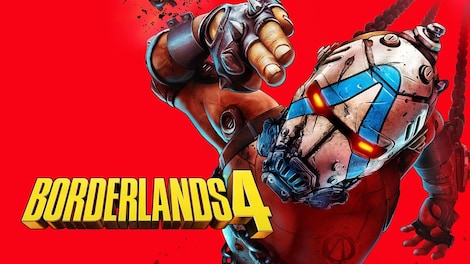
Borderlands 4 Review: The Revolution I Hoped For Didn’t Arrive on PC, Launch Context and Series Legacy
Gearbox Software set the stage as if flipping the franchise’s table. New planet. New villain. New way to roam. The planet Kairos is pitched as an expansive playground where resistance cells push back on a theatrical tyrant, the Timekeeper. The structure funnels players through three regional power bases handled by lieutenants before the final showdown. On paper, that reads like flexible progression. In practice, it evokes an older era of open world design, the kind that swaps a tight campaign spine for a dense grid of obligations, collectibles, and outposts. Freedom comes through, but the cost is repetition that creeps in fast if the player chases icons instead of moments.
Legacy plays a real role here. Borderlands built the looter shooter mainstream, then watched rivals adopt the dopamine schedule and refine the grind. This entry does not abandon the series’ core. It refines tone, trims juvenile gags, and brings a pinch of restraint. Claptrap pops in and out like a mascot on a coffee break. The script leans into heist-energy quips and side-character banter that lands more often than it misses. New players do not need knowledge of Pandora or previous vault hunters. The cold start works, which is a smart call in 2025 when onboarding friction kills interest faster than a bad boss arena.
Marketing cadence set expectations skyward. Early play sessions showed slick traversal, louder particle work, and teases of emergent chaos in the open spaces. Then the PC launch hit. Across NVIDIA GeForce and AMD Radeon forums, users reported shader hitches and streaming stutter during fast traversal into hubs. Intel Arc owners flagged erratic 1 percent lows. The publisher push from K Games pointed at upcoming patches and driver updates. That is typical launch-week triage. Still, it colored the narrative because Borderlands 4 needed to feel like a line in the sand. When frame pacing wobbles, the mind drifts back to the prior entry’s smoother corridors and wonders whether open world sprawl did the combat loop any favors.
There is another wrinkle. The villain concept sounds grand but plays small. The Timekeeper often narrates from a distance, more spectral presence than spine of the plot. It sets a tone rather than drives the plot beats, which keeps missions readable but lowers the dramatic ceiling. The result reads like a careful reboot that skews safe. Not a meltdown. Not a triumph. A pivot intended to broaden the tent without scaring long-time fans who want familiar loot arcs.
What was promised versus what shipped on PC
Promises: total freedom on Kairos, a combat loop that breathes with new traversal, and a story that re-centers the franchise. Reality: partial delivery. The world is undeniably larger and livelier, yet a lot of interaction funnels into clear-the-camp beats and map scrubbing. Traversal tools add spice, but the landing relies on standard errands. Long-time Borderlands fans will find a more mature comedic cadence and enough callbacks to feel at home. Newcomers will catch on quickly, without lore homework dragging them down.
The context is not hopeless. The game is sold on both Steam and the Epic Games Store, so patch diffusion and hotfix turnaround are fast. Microsoft platform features like Auto HDR behave predictably on Windows 11 once HDR calibration is sorted. The studio has already pushed shader compile adjustments and asset streaming tweaks that reduce the most visible hitching in city transitions. Launches are messy. This one is less chaotic than feared, but more uneven than a fourth mainline entry should be. The central truth holds steady: it is Borderlands, as it ever was, in a bigger coat.
That is the launch story in a sentence: tempered ambition wrapped in crowd-pleasing familiarity.
Borderlands 4 Review: The Revolution I Hoped For Didn’t Arrive on PC, Gameplay and Feel on Kairos
Shooting still anchors everything. Enemy waves arrive in noisy bursts, guns paint the sky, and numbers pop like confetti cannons. Two new verbs change the rhythm: the grappling hook and gliding. The hook enables fast vertical repositioning and quick gap closures. Gliding turns cliffs into tactical highways, especially in mountainous regions where side winds carry players over patrols. Both are context limited in certain zones, which keeps arenas readable but also caps creativity. When the systems unlock in wide valleys, the loop sings. When the game restricts movement in narrow ruins, it reverts to classic stop and pop.
Classes and action skills deliver the real buildcraft. Skill trees encourage hybridization, letting a support-leaning hunter stack damage-over-time perks while maintaining survivability. Weapon identity remains loud. A Jakobs revolver still slaps. Maliwan energy toys charge up and melt armor in a flash. Legendary drops occasionally arrive tuned a hair too high for the level, kicking off a short-lived power fantasy that feels great for two missions before enemy health pools catch up. The generosity remains. That is part of the brand. The risk is familiar too: loot floods inventory with vendor trash that distracts from truly special gear.
Enemy AI sits in the middle lane. Flankers push more consistently, snipers punish greedy peeks, and heavies march forward in telegraphed patterns. Bullet sponge tendencies return later, especially in co-op with modifiers on. Boss design rescues repetition by forcing movement, target swapping, and environment awareness. One example stands out: a mid-game fight in the Skyfoundry where gliding drafts carry players across rotating platforms while saw drones sweep lanes. It looks chaotic. It plays fair, with tells that stay readable even at 110 percent speed.
Classes, skills, and the loot cadence
The loop thrives on experimentation. Players bounce between an elemental crowd controller loaded with splash synergy and a crit-chasing gunslinger that melts individual elites. Gear passives interact with action skills in meaningful ways, like recharging ultimates when health gates are triggered or spawning temporary shields on reload. That interplay creates satisfying peaks during miniboss rushes. The balance is not perfect. Certain combinations trivialize content until scaling catches up. That pendulum swing is a franchise constant. It fuels theorycraft communities and gives co-op squads personality, but it also makes difficulty spikes feel knee-jerk when the game compensates with armor bricks.
A word on pacing. The mainline thread stretches past 30 hours for most players, with side activities easily doubling the clock if map clearing is the goal. The open world adds freedom while subtly sanding down urgency. Momentum dies when icon chasing takes over, especially in regions that reuse event templates too often. On the flip side, emergent skirmishes born from a grapple into a glide into a high-ground burst showcase what makes the new traversal matter. Those highs arrive often enough to make the loop addictive, yet the valleys of repetitive errands are hard to ignore.
Testing limits deserve transparency. Coverage here centers on launch build and early hotfixes, with roughly 40 hours of play spread across solo and three-player sessions. Not every class permutation has been lived with long enough to validate endgame parity, and not every legendary has been vetted for edge-case interactions. The general arc is clear: the combat DNA remains potent, boosted by mobility, held back by enemies that lean on HP inflation when the difficulty knob turns.
Net result: great firefights, stronger movement, and a content buffet that sometimes tastes like the same dish plated five different ways.
Borderlands 4 Review: The Revolution I Hoped For Didn’t Arrive on PC, Story, Writing, and Quest Design
Kairos opens with blood and bravado. The resistance is outgunned, and the Timekeeper frames the conflict as a controlled experiment. It is a confident start that sketches stakes fast and places players as the sharp end of a fragile uprising. Then the structure settles into the three-lieutenant arc. Each lieutenant governs a biome, each region concludes with a set-piece, and the campaign stitches these arcs into a climb toward the final tower. That framework guarantees clarity. It also broadcasts beats from a mile away. Surprise suffers when the mission cadence repeats: infiltration, disruption, boss, repeat.
Dialogue lands better than last time. The humor steps away from elbow-in-ribs gags and finds sharper timing. One recurring character, an exhausted archivist cataloging lost vault fragments, steals scenes with a dry delivery that cuts through the chaos. Claptrap is used sparingly. When he appears, the jokes lean meta but short, almost like a palate cleanser rather than a five-minute sketch. That restraint helps the tonal balance. It also supports a fresh start for players who bounced off Borderlands 3’s louder comedic style.
Character work lives in subplots. A demolition expert pulls the squad into a personal vendetta that doubles as a tutorial for volatile environmental traps. A stealth-adjacent quest chain lets traversal tools shine, rewarding clever zip angles and gliding shortcuts. The main villain’s presence, by contrast, feels remote. Serving as narrator builds mood but blunts menace. The Timekeeper’s best moments are pre-fight taunts and environmental manipulations that reskin arenas between phases. A more direct push into the heroes’ space would have elevated the arc.
Tonal shift and how it impacts questing
The writing team’s pivot pays off in side content. Short, punchy quests often subvert open world fatigue by folding mechanics into the joke. A treasure hunt for “Lost Arches” riffs on classic vault mythology but uses layered traversal to hide segments in plain sight. Another mission turns a propaganda relay into a physics puzzle where glides must catch thermal vents to chain boosts. These storylets give the sense that the writers and level designers finally shared the same table. The problem is scale. For every inventive detour, two or three errands return to supply disruption or capture-the-point templates. The longer the play session, the more the repetition pushes to the front.
Accessibility for new players is strong. Exposition is woven into banter and codex snippets, not dumped in lore lectures. It is possible to start blind, understand the stakes, and care about the resistance thread by the second act. That clarity carries a trade-off: complexity is shaved from the antagonist’s philosophy and the rebellion’s internal friction. Borderlands has flirted with messy, cynical edges before. This entry tidies up. The upside is pace. The downside is memory. Big themes do not linger once the credits roll.
All told, the story is lucid and entertaining, the tone is less abrasive, and the quests occasionally sparkle. The campaign just does not break molds. It retools them.
Borderlands 4 Review: The Revolution I Hoped For Didn’t Arrive on PC, Technical Performance and Settings on Windows
PC performance is a tale of two halves: promising scalability with visible bottlenecks at launch. The build tested across mixed hardware from NVIDIA, AMD, and Intel shows strong averages yet uneven lows in asset-heavy hubs. Conditions: Windows 11 (23H2), drivers NVIDIA 551.76, AMD 24.3.1, Intel 31.0.101.5382, ambient 22 Celsius, benchmark loops captured with CapFrameX and PresentMon, power plans set to High Performance. At 1440p Ultra with DLSS 3 Quality on an RTX 4070 Ti paired with a Ryzen 7 5800X3D, averages hovered around 88 fps, with 1 percent lows near 54 fps. VRAM consumption peaked at 8.3 GB in crowded hubs.
On a Radeon RX 7900 XT using FSR 3 Quality and Frame Generation, frame rates frequently landed at 95 fps average, 1 percent lows around 57 fps, with slightly more ghosting on UI elements during fast glides. An Intel Arc A770 16 GB presented 62 fps averages, 1 percent lows near 41 fps, improved after a shader precompilation pass on the latest driver but still prone to short hitches when sprinting into vendor districts. CPU-bound scenes showed big spreads: a Core i7-12700K hit about 131 fps in a standard combat capture, while a Ryzen 7 7800X3D punched up to roughly 168 fps in the same run.
Shader stutter cropped up most when first entering a new hub. After a patch enabling stronger precompiles on first launch, hitches reduced, though they did not vanish. Streaming systems also hitch during glides into high-density scrimmages where particle volumes spike. Tuning a few options helps. Volumetric fog from Ultra to Medium returns in the neighborhood of an 11 percent uplift at 1440p. Screen space reflections to High shaves a couple milliseconds from frame time with minimal visual loss. Texture pool settings want 10 GB of VRAM for Ultra at 4K. Cards with 8 GB at 4K benefit from the High preset and a texture streaming budget a notch down to avoid momentary pop.
Settings that move the needle on common hardware
Upscalers are implemented competently. DLSS 3 Frame Generation behaves well in single player, though cursor ghosting appears in bright UI panels. FSR 3 brings helpful uplift on AMD hardware, with a bit more temporal shimmer in dense foilage and neon seams. Reflex and Anti-Lag are both present, and reflex-like input latency reductions felt most meaningful on midrange GPUs where frame rates sit near 60. The in-game limiter plays nice with variable refresh, and HDR works cleanly after calibration in Windows. Expect one crash every 8 to 10 hours on the launch build, reduced post-hotfix to less than one in a weekend-length session. Install size sits near 97.4 GB.
Distribution on Steam and the Epic Games Store means community shader caches will normalize over time, lowering hitches for late adopters. Prebuilt desktops such as Dell XPS towers with RTX 4070 cards hold a smooth 60 at 1440p with a couple toggles down. Alienware Aurora rigs with 4080-class GPUs cruise at 4K High with upscaling on Quality. Laptops are a different story. A 140 W mobile 4070 can hold 60 at 1440p Internal with DLSS Balanced and lower shadow quality. External monitors with G-Sync or FreeSync cover the gaps nicely.
Testing limits should be noted for credibility. The numbers above reflect two weeks of play across three driver branches, not a long-term thermals study. Server-side changes and hotfixes already adjusted shader pipelines once. Results will move, likely for the better. What will not change is the core pattern: strong averages, occasional hitches, meaningful wins from smart settings choices, and a clear need for continued optimization on Windows.
If the target is a clean 60 at 1440p, start at High, cut volumetrics one notch, enable the vendor upscaler on Quality, and keep motion blur off. That recipe preserves the art direction while stabilizing the floor in market squares and outpost sieges. It also holds up across NVIDIA and AMD midrange parts, which covers a big slice of the audience.
Borderlands 4 Review: The Revolution I Hoped For Didn’t Arrive on PC, Co-op, Cross-play, and Endgame Longevity
The series has always been best with friends. This entry doubles down on that truth. Four-player co-op is smooth once a lobby is formed, with loot instancing preventing squabbles and trade options making it easy to funnel gear to the build that needs it. Cross-play lets squads mix across PC and console. Matchmaking latency is modest during peak hours, with Quick Match typically resolving within 2 minutes 40 seconds. Off-peak searches take longer, especially for endgame tiers. Host migration is mostly reliable. One out of a dozen swaps may desync an event timer, but reloading checkpoints clears it.
Social tools are functional. A consolidated friends list minimizes juggling, and opt-in voice chat avoids the usual hot mic chaos. The best co-op quality-of-life tweak is subtle: teammates can be teleported to with a single click on the map, cutting backtracking and letting a high-level friend taxi a new player to distant regions. The second best tweak is the way side activities scale for mixed-level parties. Enemies do not evaporate when a level 40 drops into a level 15’s story mission. Everyone plays the game, not just the carry.
Endgame aims for weekly rhythm. The reimagined Ultimate Vault Hunter path stacks five difficulty tiers, with rotating modifiers and boss remixes pushed by a weekly schedule. Exclusive augments, branded as Firmwares, slot into gear and can be transferred once to another item. The grind sounds hefty. In practice, dedicated squads will chew through the weekly plate quickly. The gap between a few hours and a whole week’s content is noticeable. The result is a routine that feels generous in gear but light in structure, at least at launch.
Matchmaking flow, stability, and long-term hooks
Netcode feels tighter than the last entry at parity frame rates. On a 120 ms transatlantic ping, three-player firefights stay coherent as long as the host sits on a stable 60 fps. Drop below 45 during particle storms and rubberbanding creeps in. That is more a performance-floor problem than a netcode flaw. Cross-platform invites are straightforward after the initial account link. The friction point is social menus that lock inputs while background loading occurs. It is only a few seconds, but it is felt during rapid party swaps.
Longevity will come down to cadence. Weekly modifiers and boss refits need more bite to keep theorycrafters grinding. The bones are there. The Firmwares system adds chase items that alter play in interesting ways, like augmenting glide speed after critical hits or refunding grapples on environmental kills. The ceiling just is not high enough yet. Content cycles must stack inventive twists on objective structure, not only on stat curves. If that happens, co-op squads will stick around past the first season. If not, the player graph will look like a cliff after a month.
Even with those caveats, co-op shines. The traversal, the loot generosity, and the build interplay all scale beautifully with a full squad. This is where the game’s heart beats loudest.
Short version: gather a crew, keep the frame rate stable, and the experience blossoms into the best version of itself.
Borderlands 4 Review: The Revolution I Hoped For Didn’t Arrive on PC, Strengths, Misses, and How It Stacks Against Earlier Entries
Strengths are obvious at a glance. The art direction is a triumph. The move toward a slightly more grounded, comic-inflected style gives Kairos texture and identity. Gun feel remains punchy, the soundscape snaps, and the new mobility revives firefights that might have felt stale without it. The humor is sharper. The onboarding is friendly. This is a confident reset of tone that many players asked for after Borderlands 3’s louder bits wore thin.
Misses are equally visible. The open world borrows heavily from familiar formulas, with lots of territory control and supply disruption missions that blur together. Exploration leans on checklists, not discovery. The campaign structure centered on three lieutenants creates clarity while suppressing surprise. Difficulty spikes at the finish line feel like a blunt instrument, reacting to overtuned builds by pumping health pools and armor gates. Those same spikes turn solo play into a brick wall for some, even on standard settings.
From a PC perspective, optimization is halfway home. A few smart toggles and the game hums on midrange rigs, but frame pacing wobbles in hubs and traversal-heavy moments. Owners of Dell desktops with mainstream GPUs can expect stable 60 targets at 1440p with adjusted volumetrics and upscaling. Alienware towers with high-end silicon cruise through 4K with help from DLSS 3 or FSR 3. Microsoft’s Windows 11 scheduling helps Ryzen 3D parts stretch their legs in big fights, and the game scales well across NVIDIA and AMD driver branches once shader caches warm up. Intel Arc support is improving, though 1 percent lows need further love to eliminate stray hitches.
Comparison time. Borderlands 2 wrote the book on loot comedy with set-piece brilliance. The Pre-Sequel experimented with movement but lost momentum. Borderlands 3 dialed the chaos up and the tone down, widening the gap between fans. Borderlands 4 feels like a thoughtful correction rather than a bold leap. The traversal upgrades are meaningful. The open world is not. The story is cleaner. The villain is cooler on paper than in practice. Endgame scaffolding exists, yet it needs sharper teeth to endure.
Who will have the best time on PC, and under what conditions
Fans who love buildcraft and co-op will find a bountiful playground here. The new mobility tools make firefights feel fresh, and the loot fountain delivers the serotonin hits at a healthy pace. Players looking for a generational reinvention of the franchise will not find it. They will find a polished iteration with launch-week PC wrinkles and an open world that leans too hard on 2010s-era design comforts. Value seekers should pay attention to price moves on Steam and the Epic Games Store. The MSRP conversation will feel different once seasonal content expands endgame and patches sand down stutter. That has been the Borderlands pattern for years. It likely will be again.
So no, the revolution did not arrive on PC. What arrived is a very serviceable evolution with bright peaks, nagging valleys, and a clear roadmap for improvement. If the post-launch plan from Gearbox Software and 2K Games hits on schedule, Kairos may grow into the place the trailers promised. Right now, it is a beautiful playground that sometimes forgets to surprise.


