

Hell is Us arrives with a bold pitch that cuts clean through the noise: minimal UI, no map and no quest markers, and a fixation on observation that evokes Death Stranding while flirting with Dark Souls style discipline. It is not a pure Soulslike. It borrows stamina management, timing, and unforgiving reads from FromSoftware design, then pivots to quiet, almost meditative traversal and clue hunting that feels closer to a walk through a haunted museum than a checklist-heavy Open World Adventure. The setting matters. A closed-off nation named Hadea, a protagonist called Remi searching for family, and a civil war backdrop that reframes every ruin and checkpoint as history, not filler. That premise stands up because it asks players to engage with space, not with a compass.
There is a catch. The promise of total disorientation rarely materializes, since zones are compact and clearly authored. Exploration lands, but not always with the dizzying vertigo of true wilderness. Still, the identity is coherent. Combat folds in special resources and a modular drone that bends encounters in clever ways. Puzzles lean simple yet functional, and the lore density will please anyone who enjoys treating a game like a dossier. Performance lands surprisingly well on consoles, with 60 frames per second in Performance mode on PS5, while PC can run hot if settings stay ambitious. Layer in art direction that whiplashes from medieval stone to sterile labs, a moody score that murmurs more than it shouts, and the result reads like a calculated swing at a Hidden Gem: not a crowd-pleaser, but a confident, specific thing.
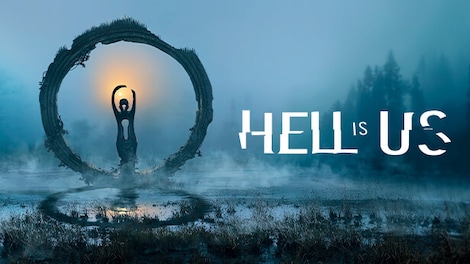
Hell is Us Review Overview: Soulslike Tension Meets Death Stranding Quiet
What sets this release apart is restraint. Instead of waypoint spam, the design hands players landmarks, environmental tells, and a tablet that organizes leads in an Outer Wilds style web. That means progress feels earned through attention. The absence of a global map sounds brutal on paper, yet the game splits Hadea into discrete regions with minimal bloat. Each zone functions as a micro-biome with a self-contained loop: scout, decode signals, clear threats, open short routes, crack a sealed door. It is deliberate, not sprawling, and that choice keeps friction focused on reading space rather than commuting across it.
The marketing reference points are clear. Dark Souls gives the skeleton for stamina, poise reads, and high-risk momentum. Death Stranding contributes the patience and the respect for terrain as story. The studio has cited late 90s philosophy, the era where players were trusted to parse cryptic instructions and implied logic. The influence is not cosmetic. Quest text offers fragments, not long paragraphs. Clues sit in murals, patterns of debris, or the direction of smoke. Missing the cue is possible, which makes discovery feel slightly illicit, like peeking behind a stage prop that was not meant to move.
Even with this posture, the game stops short of full austerity. Zones are big enough to hide a few mysteries, small enough to be learned in an evening. That balance keeps repetition in check and makes backtracking less of a chore when late abilities unlock new interactions. Some players wanted a wilder wilderness. Others will appreciate that the minimalism does not become punishment. Community chatter already highlights a recurring split: fans of old-school adventure applaud the refusal to babysit, while completionists note that the puzzle layer rarely exceeds code gathering and light spatial riddles.
The conversation will circle back to authorship. FromSoftware crafts labyrinths that twist into themselves. Hideo Kojima made delivery a meditation on weight and intent. Hell is Us borrows their rhythm, not their templates. Combat is a separate channel from traversal, and that channel leans on a stylized enemy ecosystem tied to Remi’s “lymbic” energy. The tone swings hard between grounded military ruins and spectral aftermaths with neon anomalies. That oscillation gives the campaign bite. One moment is all smoke and rebar. The next is a shrine soaked in impossible colors. The trick works because the transitions are paced like scene cuts, not like open-world drift.
For context hunters and tech readers who enjoy seeing cross-medium comparisons, this site’s Battlefield 6 review tackled scripted spectacle versus player-made stories in shooters. Hell is Us lands on the other side: it trims spectacle so that memory forms around routes taken, not explosions survived. Both approaches can coexist, but they make different promises about agency and replay value.
Key takeaway: restraint as identity
Minimal UI, authored regions, and quiet traversal form the core loop. The result is not a full survival pilgrimage. It is a curatorial walk through a war-torn archive where combat pressure punctuates long pockets of stillness. Those seeking dyed-in-the-wool Soulslike suffering may bounce. Those looking for a thoughtful Action RPG with real confidence in silence will likely stay.
The next section drills into mechanics, since the combat builds the game’s most surprising risk-reward loops and informs how exploration tempo feels in practice.
Combat Systems Deep Dive: Stamina Links To Health, Drone Powers Define Flow
Combat marries readable animation with a twisty resource model. Every swing and dodge consumes stamina, which is standard Soulslike doctrine. Here is the wrinkle: maximum stamina scales with current health. Take a hit, and total stamina shrinks until healing recovers both tracks. The system punishes sloppy exchanges and rewards players who avoid chip damage altogether. The effect is immediate. A fight that begins with free movement can compress into panic if two strikes land, since evade windows grow tighter and combos collapse.
A second layer called the Healing Pulse invites aggression. Land consecutive blows, then cash out with a timed input to siphon a chunk of health back. Longer strings yield larger recovery. This design pulls players forward rather than backpedaling behind a shield forever. The loop echoes Nioh’s energy recentering concept, though it remains simpler to execute. It also pairs neatly with the drone, which is more than a flashlight. Modules can stun a single threat for a few seconds, propel Remi in a short burst that pierces armor, or spin him into a tight multi-hit vortex. The drone is not a cheat. Cooldowns and positioning checks keep it from trivializing elites.
Weapons and perks offer build expression without drowning the screen in stats. Blades can be enchanted along four mood-aligned tracks: Rage, Sorrow, Terror, and Ecstasy. Each path unlocks sockets for related powers and nudges the kit toward different tempos. Rage favors burst and stagger, Sorrow leans sustain, Terror toys with fear-like debuffs, Ecstasy juices mobility and multi-hit strings. The tree is not bottomless, yet it is dense enough to flavor runs and respec experimentation. Another lever sits in difficulty tuning. Beyond three presets (Indulgent, Balanced, Ruthless), sliders allow manual edits to enemy health, player damage taken, and AI aggression. A punitive death option can reset weapon experience between checkpoints, which transforms routine routes into nail-biters.
The bestiary lands as the system’s fragile point. About ten core enemy types appear, each with three escalating variants. Two families dominate encounters: the white, hollow-headed Walkers and the neon-threaded Haze anomalies that link to them by an umbilical cord. Their combined presence creates interesting tug-of-war decisions, since breaking the link can defang a cluster. Yet repetition creeps in during extended sessions, and the camera occasionally struggles with the Haze’s wide swings and particle-heavy tells. Bosses offer cleaner direction. Their patterns teach, then punish, with windows that feel fair once decoded.
Animation reads are serviceable. Telegraphs sit in the sweet spot between obvious and deceptive. Attack start-ups stretch just enough to bait early rolls, and recovery frames invite counter aggression if discipline holds. Poise trading exists, though never becomes a pure stagger meta, since stamina starvation is always one mistake away. That tension stays crisp even late, when upgraded kits could have snowballed into boredom in a looser design. It does not, mostly because the health-stamina tether keeps players honest.
There are limits worth noting. Long-term balance shifts after launch cannot be guaranteed, and a two-week pre-launch window is not sufficient to judge the patch cadence that live games often require. Even so, the foundation feels solid. Encounters push clarity over chaos, and the drone injects improvisation that pure melee sets sometimes lack.
Practical example: a midgame outpost
Consider a small courtyard with two Walkers and one Haze. Open with a drone stun to isolate a Walker. Build a string, then trigger Healing Pulse to cash back life. The Haze swings in. Use the dash module to pierce through and sever the link. Now stamina is still healthy, so a short combo into Rage buffs closes the loop. The same space can be solved by a Terror build, which scares the Haze into a delayed entry and buys extra frames to clear the yard. The variety lives in timing and sequencing, not in an inventory of a hundred buttons.
One last angle before moving to exploration: multiplayer does not exist here. The fights are private, personal, and shaped by the player’s appetite for risk, which aligns with the game’s thesis about attention and intent.
With the core loop framed, the next focus is space itself, since mapless navigation and puzzle logic will either hook explorers or push them away.
Exploration Without Markers: Structured Wilderness, Puzzles That Favor Sleuthing
The promise reads like a dare: no map, no GPS, no waypoint trail. In reality, navigation rarely devolves into frustration because the game carves Hadea into self-contained regions with crisp sightlines. Players read chimney smoke, trail flags, or a broken fence to infer direction. Smaller hublets branch into narrow spokes that fold back into themselves with shortcuts. It is a familiar grammar borrowed from late 2000s action adventures, filtered through a modern appetite for diegetic information.
Exploration rewards curiosity with lore files, environmental vignettes, and locked doors that only open once a web of clues aligns. The tablet interface organizes discoveries as an arborescent caseboard. Leads fan out from central mysteries, and nodes light up when evidence thresholds are met. The design echoes Outer Wilds, though the stakes are gentler. Progress depends on comprehension rather than gear score. When players get stuck, the cause tends to be a missed note or a misread symbol rather than a build check.
Puzzles skew practical. Codes are pulled from matching fragments across posters, memorial plaques, and radio chatter. Optional riddles hinge on returning later with a single key item recovered from a distant detour. A few mazelike layouts overstay their welcome, where stone corridors and near-identical alcoves blur into repetition. That is where the no-map doctrine can feel more dogma than delight. The second act compensates with tighter, clearer objectives and zones that drop the labyrinth for leaner, more pointed problems. The shift is noticeable and reduces dead time.
Traversal itself sits in a realistic bracket. There is no crunchy stamina tax for walking long distances. The fatigue is mental, not mechanical. Landmarks do the guiding. The terrain occasionally spikes in verticality, but platforming is conservative, with safe climbs and short shimmies. That conservatism keeps the experience approachable for players who adore Death Stranding style quiet but do not want to micromanage balance or loadouts. It is less a delivery sim and more a field study.
Community impressions align around that field study vibe. Early forum posts and Discord chatter praise the sense of place, especially when a ruined village tells its story without a single pop-up. Detractors point at puzzle repetition and the feeling that the no-marker pitch is undercut by the manageably small play spaces. Both camps can be right. The game deliberately avoids the vastness that made some 2010s sandboxes tedious. The cost is fewer moments of delicious panic when true lostness sets in.
Readers who enjoy adjacent meditative design can cross-reference our look at atmospheric horror in Cronos The New Dawn. Different genre, similar respect for silence and negative space. For archival-minded players, storing long capture sessions and screenshots benefits from a solid home server. The analysis of the UGREEN DXP4800 Plus NAS explains why reliable storage matters when sessions stretch to 20 or 30 hours and raw video piles up.
Why the exploration posture works
Information is earned by looking, not granted by UI. Even when puzzles repeat a pattern, the loop of noticing, testing, and confirming binds players to the setting. The approach also primes the narrative to land with fewer cutscenes, since much of the story is absorbed through the act of moving through Hadea’s wounds.
The aesthetic lifts a lot of this weight. Visual clarity and audio cues steer attention better than any waypoint system could, which sets up the next subject: story and style working together.
Now for the narrative tone, voice work, and the Unreal Engine 5 presentation that gives the world its uneasy calm.
Narrative, Art Direction, and Sound: Hadea’s Wounds As Playable History
At its core, Hell is Us is a character piece. Remi left Hadea as a child and returns as an ex-soldier seeking answers about missing parents. That simple hook expands into an investigation of national trauma, memory, and guilt. The plot does not try to out-twist prestige thrillers. It aims for clarity and emotional steadiness, then lets optional files and side shrines deepen context for those who chase it. The writing avoids purple prose. It is clipped, purposeful, and occasionally dry, which fits a protagonist who learned to bury feeling under routine.
Direction favors restraint over bombast. Cinematics are concise and well-framed, using facial capture that lands better than expected for a mid-budget release. The decision to alternate radically different spaces is the real storyteller. One region may echo Bandai Namco dark fantasy vibes with gothic silhouettes and creaking timber. The next leaps into glossy modern facilities or a lake rimmed with fog and shattered pylons. The shifts keep the campaign awake. They also make each new unlock feel like a promise of a fresh visual thesis rather than a palette swap.
Technically, Unreal Engine 5 does a lot of heavy lifting. Interiors pack dense prop detail and reflective surfaces that catch low, slanting light in a way that sells mood without screaming for attention. Character models sit in the respectable bracket, with expressive eyes and skin shading that avoids the waxy uncanny valley. The tradeoff appears on PC, where those reflections and heavy particle fields can spike GPU demand. On PS5, the Performance mode sits near 60 fps with only minor dips in dense, open zones. Clipping can pop in open hubs, and some crowded scenes create a shimmer on fine geometry. It is visible, not deal-breaking.
Audio seals the vibe. The score prefers drones, sparse percussion, and brief melodic lines that surface during discoveries, then fade before overstaying. It is not a hummable soundtrack. It is a skeleton that props up moments. One criticism sticks: motifs can repeat, especially during long puzzle runs, and that repetition dilutes impact on extended sessions. Voice work is steady, with a few standout scenes that hinge on exhaustion rather than rage. The mix prioritizes footsteps, rustle, and wind. That choice turns traversal into a tension tool. If players hear too much music, fear evaporates. If they hear only the world, the world can frighten them.
For readers who follow cross-device ecosystems, remote capture and sharing workflows matter. Interesting cuts from this game’s photo mode or short combat clips move quickest when phones and storage are tuned. The iPhone 17 comparison breaks down which models handle heavy ProRes clips without choking, while the credit card size smartphone feature highlights ultra-compact gear that still handles field edits for social posts.
Atmosphere over exposition
The game trusts space and sound more than monologues. That trust pays off when players slow down. It falters when puzzle loops stretch and the score repeats. Even with those dips, the overall aesthetic coherence is strong for a project that bounces between eras and materials so aggressively.
All that style still needs technical steadiness under it. The next section zeroes in on optimization and platform differences that will shape day one impressions.
Performance, Platforms, and Stability: PS5 Fluency, PC Demands, Xbox Parity
The launch target covers PC, PS5, and Xbox Series. Console players get two modes. Performance holds near 60 frames per second in most scenes and trades some foliage density and reflection fidelity for fluidity. Quality mode stabilizes visual bells and whistles but slides into the 40s during intense effects. The Performance compromise is the smarter choice for a combat-forward loop where stamina timing depends on consistent frame pacing. On PS5 specifically, tearing stays rare and input delay feels tight enough for perfect dodge windows.
PC is trickier. Midrange GPUs hit varying walls depending on resolution and effects. Cards in the RTX 3060 to 3070 class tend to run in the mid 50s at 1440p with medium to high settings when heavy particles fill the frame. CPU spikes are uncommon, which suggests good threading on enemy logic and world scripting. VRAM usage climbs when reflections and high-res textures stay enabled. That is where judicious toggling matters. Dropping reflection quality and a notch of volumetrics recovers headroom without obvious aesthetic collapse. Stability sits in a decent bracket for a new UE5 title, though a few clipping artifacts and rare camera hitches persist in packed courtyards.
Xbox Series X tracks PS5 closely in Performance mode with similar dips in busy plazas. Series S understandably trims more effects and targets a lower resolution, but controller feel stays competent, and the core identity survives. Load times are modest across consoles thanks to SSDs, and fast travel between pins is unnecessary by design, which sidesteps a common open-world bottleneck entirely.
Tech-minded readers who enjoy the nuts and bolts can look at recent mobile compute pieces to see how efficient silicon shifts user expectations. The ASUS Zenbook A14 review shows how Snapdragon laptops push efficiency without muscle, which in turn shapes how cloud streaming and capture workflows interact with console play. Energy backup for long capture sessions is another practical angle. The portable power stations long-term test explains how to keep a setup running cleanly during lengthy downloads or patch marathons.
There are unavoidable caveats. Long-haul stability will depend on post-launch patches, especially for ultra-wide quirks on PC and a handful of animation blend pops when Remi exits a sprint into a lock-on. Content cadence is also unknown at launch, so the balance between fresh enemy variants and repeat clears may change over time.
Practical tweaking guide
Consoles: choose Performance. The visual sacrifice is light and the payoff in feel is significant. PC: cap at 60, cut reflections one step, drop volumetrics to medium, and keep textures high if VRAM allows. The result looks convincing and feels responsive in the thick of a three-enemy scrum.
With performance framed, only one question remains for many readers: is this unusual blend poised to live quietly or to linger as a cult favorite worth recommending to friends who crave something specific?
Is Hell is Us the Hidden Gem Gamers Wanted: Value, Risks, and Who Will Love It
Value in games is less about raw hours than about memory density. Hell is Us delivers roughly 20 hours for the main path and 30 for full completion. Those hours are not a treadmill. They are vignettes. The variance between zones, the mood swings in art direction, and the friction of reading space rather than obeying icons generate distinct recollections. Weaknesses remain. The enemy roster is thin for a combat-first experience. Some puzzles feel like admin work. A couple of level layouts default to mazes without a strong thematic reason. Yet the sum still feels rare in a market that often confuses generosity with abundance.
Who will love it. Players who respect FromSoftware pacing but do not need co-op invasions or elaborate stat crunching. Fans of Hideo Kojima style quiet who want solitude without cargo balancing. Anyone craving a curated Action RPG that says less on-screen so the world can say more. Who should skip. Players who expect encyclopedic movesets, oversized boss rosters, or a sprawling sandbox. Trophy hunters who want checklists may find the caseboard elegant but light.
Release timing matters. The game lands on September 4, 2025 for PC, PS5, and Xbox Series. The window is crowded. Big tentpoles will shout louder. That is fine. The project is comfortable with being discovered rather than announced. This site has covered plenty of divisive launches that later grew into cult status, including a surprising Football Manager 26 PC test where expectations and delivery drifted. Hell is Us could track a similar arc in a different lane. Word of mouth will do more than any trailer.
Price will nudge the verdict. If the tag sits in the standard AA bracket, the proposition looks strong. The craft and confidence outweigh the lighter bestiary and puzzle repetition. If the tag creeps into premium territory, the equation tilts, and the absence of robust enemy diversity becomes tougher to forgive. Even so, the experience feels cohesive enough that many will not care about counts. They will remember a lake laced with fog and rebar. They will remember a door that opened because they noticed three small things in the right order.
Curious players who live for mood-forward games should pencil this one in. Not as a replacement for a giant Soulslike from Bandai Namco partners. As a complement. As an antidote to noise. That is how hidden favorites are born.
Final signal
Yes, this looks like a Hidden Gem in the making: precise combat, authored exploration, strong art direction, and a personality that does not chase trends. Rough edges exist, and the roster needs more monsters. The voice is clear anyway.
One last note for collectors and sharers: a captured library of moments from a game this moody deserves good curation and backup. The NAS piece linked earlier covers long-term storage, and heavy video creators can revisit the mobile capture angle in the iPhone comparison for workflow sanity.


