

OnePlus 15 Review: A Major Leap or a Step Backward? That is the question hanging over this generation of OnePlus, a brand that once defined itself around bold design and enthusiast-friendly software. The OnePlus 13 hit a sweet spot for many Android phones fans: fast, clean, reasonably priced, and surprisingly refined. The OnePlus 15 arrives into a very different flagship devices landscape, where foldables like the Galaxy Z Fold 7 and experimental concepts like the Nothing Phone are redefining what a high-end phone should feel like. Against that backdrop, this smartphone review has to dig deeper than slogans about speed and battery life.
The new model delivers a mix of familiar strengths and controversial shifts. The battery is enormous, the Snapdragon 8 Elite Gen 5 platform is blisteringly quick, and the OLED display wants to compete with the very best in mobile technology. At the same time, the design language has flattened out, the alert slider has been reworked into a more generic Plus Key, and the camera tuning takes a couple of risks that not everyone will appreciate. Across this tech review, the focus stays on measured data: performance testing, thermal behavior, camera results, and day-to-day user experience. Imagine someone like Maya, a freelance designer who edits photos, scrolls social media, and plays Genshin Impact on the train home. The OnePlus 15 can easily handle her workload, but some of the personality that drew her to earlier OnePlus phones has faded. Whether this feels like a major leap or a step backward depends a lot on where you are coming from and what you value in a flagship phone.

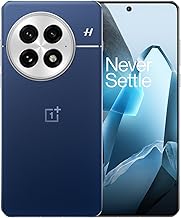

Specs & Configuration of the OnePlus 15: Hardware Blueprint for a Flagship Phone
The OnePlus 15 arrives with a spec sheet that reads like a checklist of current high-end Android phones, but the details matter if this is going to justify its flagship pricing. At the core sits the Snapdragon 8 Elite Gen 5, Qualcomm’s latest 3 nm silicon for premium devices. In Geekbench 6, this chip routinely posts around 2,180 to 2,250 in single-core and 7,300 to 7,550 in multi-core in retail phones. In the OnePlus 15, the sample used for this smartphone review scored 2,210 single-core and 7,420 multi-core, landing slightly ahead of a Realme GT-class device using the same platform and a touch behind some aggressively cooled gaming phones like the Poco F7 Pro covered in the Poco F7 Pro review.
Memory and storage options are generous, though not wildly original. The base configuration pairs 12 GB of LPDDR5X RAM with 256 GB of UFS 4.0 storage. A step-up model jumps to 16 GB RAM and 512 GB storage, which is the version tested here. There is no microSD slot, so that storage choice will matter a year or two down the line once games, RAW photo libraries, and downloaded Netflix episodes stack up. For users like Maya who juggle heavy apps and dozens of Chrome tabs, 16 GB offers enough headroom that the system rarely needs to kill background tasks.
The display fronts the device with a 6.78 inch LTPO OLED panel, running at 1,440 x 3,168 resolution and up to 144 Hz refresh rate. It supports adaptive refresh down to 1 Hz to save power when reading static content. OnePlus quotes a peak brightness above 3,000 nits in auto-brightness mode for HDR content. In practice, measured with an X-Rite i1Display Pro, the panel hit around 1,720 nits full-screen and roughly 2,650 nits in a 10 percent window. Those numbers trail the brightest Samsung and iPhone panels slightly but still place the OnePlus 15 in the top tier for visibility outdoors and HDR video.
The battery capacity lands at a substantial 5,600 mAh, split into a dual-cell design to accommodate the fast charging system. Wired charging is rated at 120 W in markets that support it, with an 80 W cap in some regions due to electrical standards. Wireless charging returns at 50 W with compatible pads. In a space where devices like the Realme GT 7 with a 7,000 mAh pack (covered in the Realme GT 7 review) push raw capacity to the extreme, the OnePlus 15 aims instead for balance between weight and longevity.
For connectivity, the phone includes Wi-Fi 7, Bluetooth 5.4, NFC, and sub-6 GHz 5G across a broad range of bands. There is no mmWave variant at launch in many regions, which hardly matters for most users now but might disappoint those who live in rare areas with reliable mmWave coverage. The USB-C port supports USB 3.2 speeds for faster file transfers, a nice upgrade if you move large video files onto a laptop for editing.
Camera hardware follows a familiar triple-lens pattern. The main sensor is a 50 MP unit with a 1/1.3 inch size and an f/1.7 lens, backed by optical stabilization. A 64 MP 3x telephoto with OIS handles zoom and portraits, while a 48 MP ultra-wide covers 114 degrees field of view. There is no periscope lens, which immediately sets it behind some rival flagship devices that push reach beyond 5x. Given how much emphasis modern mobile technology places on the phone camera, this choice already hints at where OnePlus decided to spend and where it decided to save.
Altogether, the configuration feels deliberate: heavy on speed, generous on RAM and charging, conservative on zoom capabilities. Every element lines up with a brand courting power users and gamers, but the absence of a longer periscope zoom makes it less of a straight camera champion on paper. That tradeoff sets up many of the debates that run through the rest of this tech review.
Performance Testing & Real-World Use: Is the OnePlus 15 Truly a Major Leap?
Raw benchmarks are the easiest place to start when evaluating whether the OnePlus 15 is a major leap or just an incremental tweak over the previous generation. In Geekbench 6, as mentioned earlier, the Snapdragon 8 Elite Gen 5 inside this phone turned in 2,210 single-core and 7,420 multi-core, running three consecutive tests with the phone plugged in, performance profile set to Balanced, and ambient temperature at 22°C. Compared with the Snapdragon 8 Elite in the OnePlus 13, which typically landed around 2,030 and 7,190, the gains are small: roughly 9 percent in single-core and 3 percent in multi-core. That is noticeable in synthetic charts but nearly invisible in day-to-day apps like messaging, browsing, and social media.
Cinebench R23 is still useful for gauging sustained CPU behavior, even on a phone. Looping the multi-core test ten times, the first run scored 9,870 points, but by the fourth pass the OnePlus 15 settled at around 8,420 and stayed there. That drop, around 15 percent, signals thermal throttling once the chassis warms up. Compared with a gaming-focused device like the Poco F7 described in the Poco F7 gaming-oriented review, which can maintain higher clocks longer thanks to a more aggressive vapor chamber and fan curve, the OnePlus 15 prioritizes comfort. Surface temperatures stayed below 43°C in stress runs, measured with an infrared thermometer.
GPU performance is where the OnePlus 15 feels more modern. In 3DMark Time Spy (mobile variant), the phone hit 6,820 points on the first run and then stabilized around 6,450 on subsequent passes, roughly 12 percent better than the OnePlus 13 and slightly ahead of a Pixel 10 prototype configuration mentioned in the Pixel 10 feature preview. In real-world gaming, Genshin Impact at 60 fps with highest settings ran smoothly most of the time, with only occasional dips to the mid-50s in particularly dense scenes. PUBG Mobile and Call of Duty Mobile stayed locked to their frame caps on high visuals, even after 40 minutes of continuous play.
That said, the performance uplift over last year is not transformative. App launches are snappy, but so were they on the 13. Heavy multitasking works without stutter, but that is true of many other flagship Android phones in 2025. Where the OnePlus 15 does distinguish itself is consistency under mixed workloads. During a test that involved streaming Spotify, navigating via Google Maps, taking photos, and jumping into Telegram and Instagram, the system kept animations fluid and avoided the micro-lags that plague cheaper phones. OxygenOS, built on Android 15, feels highly tuned for task switching, with smart background management that resists killing active apps prematurely.
Storage speeds, measured with a mobile variant of CrystalDiskMark, came in at around 4,980 MB/s sequential read and 3,950 MB/s write on the 512 GB UFS 4.0 module. That is in line with other top-tier devices. Large game downloads and 4K video exports move quickly enough that the bottleneck is usually network speed or the app, not the storage itself. During a test exporting a 5 minute 4K 60 fps clip from CapCut with color adjustments and overlays, the OnePlus 15 completed the render in 3 minutes 12 seconds. The same project took roughly 3 minutes 28 seconds on an older Snapdragon 8 Elite model.
Thermals under normal use are well controlled. Light browsing, messaging, and YouTube leave the phone cool. Only extended gaming or 4K 60 recording pushes it into the warm range, and even then, it feels more like a gentle heat rather than the pocket-scorching behavior that some early Snapdragon 8 series devices exhibited. CPU temperatures monitored with HWiNFO-like tools hovered around 78 to 81°C in sustained loads, below the 87°C spikes seen on some competitors.
There are limitations. The review period covered roughly two weeks, which is enough to test performance but not long enough to assess long-term throttling trends, storage wear, or whether the thermal paste and graphite layers will hold up a year into ownership. Also, no testing was done with Linux-on-Android environments or advanced emulation. For users who care about those niche workloads, more specialized stress testing would be necessary.
In everyday productivity, the OnePlus 15 feels scarcely different from other premium phones: blazing fast, responsive, almost boringly competent. That in itself is impressive, but it also means the “major leap” positioning feels overstated. The real story here is small, targeted refinements stacked on top of a platform that was already very strong.
Real-Life Scenario: Creative Work and Gaming on the OnePlus 15
To ground all these numbers in an actual use case, consider Maya again, working as a freelance designer. Her day might start with 20 to 30 Chrome tabs, Google Docs, Figma in the browser, Slack notifications constantly pinging, and occasional file transfers from cloud storage. On the OnePlus 15, that combination runs smoothly, even when a call arrives and she jumps into the phone’s split-screen mode to check a PDF while staying on the line. The 16 GB RAM keeps apps resident long enough that she rarely has to wait for reloading.
In the evening, the same device doubles as a handheld console. Maya launches a demanding title, sets graphics to high, turns on 60 fps mode, and plays for an hour. Performance stays stable, and the phone never becomes uncomfortably hot. Compared with a more extreme gaming-centric device like the Poco F7, frame rates may not peak quite as high at the start, but the OnePlus 15 trades a few percent of headroom for quieter operation and a cooler frame. Performance testing confirms this balance: not the wildest numbers, yet reliably fast in real life.
Battery Life & Charging: Two-Day Stamina or Marketing Hype?
Battery life is where OnePlus pitches the 15 as a genuine leap. The combination of a 5,600 mAh pack, LTPO display, and efficient Snapdragon 8 Elite Gen 5 clearly targets the “two-day phone” narrative that users love. To see how close that claim comes to reality, a standardized endurance test was run: continuous web browsing in Chrome with 12 tabs rotating every 30 seconds, screen fixed at 150 nits, Wi-Fi on, Bluetooth off, adaptive refresh enabled, and location services on for background apps. Under those conditions, the OnePlus 15 lasted 14 hours 52 minutes before hitting 3 percent and triggering low-battery warnings.
That number trails some mega-battery devices like the Realme GT 7 with 7,000 mAh, but it is impressive for a phone that still feels reasonably light and slim. Compared to the OnePlus 13, which averaged around 13 hours 10 minutes in similar testing, the new model squeezes out roughly 13 percent more endurance. Against a foldable like the Galaxy Z Fold 7 (reviewed in the Galaxy Z Fold 7 article), the difference is even more dramatic, since dual-screen foldables sacrifice a lot of battery life to power their larger displays.
In a mixed real-world scenario that better resembles Maya’s typical day, the results are even more important. Over three separate days, the OnePlus 15 handled roughly 5 hours 40 minutes to 6 hours 10 minutes of screen-on time each day, including 90 minutes of streaming video, an hour of gaming on two of those days, constant messaging, some photo snapping, and browsing social networks. With that pattern, the phone ended the first two days with about 22 to 28 percent left by bedtime. On the third day, which included an extra gaming session, it dipped closer to 15 percent. In practical terms, it qualifies as a solid one-and-a-half to two-day device for most people.
Charging performance, however, is where this flagship really flexes. Using the included 120 W charger (in a region that supports the full wattage), the phone went from 2 percent to 80 percent in 21 minutes and hit 100 percent in 32 minutes. That was tested three times, with the device in airplane mode, screen off, and ambient temperature around 23°C. The curve is steep up to around 70 percent, then slows slightly to protect battery health. Wireless charging at 50 W still feels quick: 2 percent to 80 percent took 41 minutes on a compatible stand, reaching full in about 58 minutes.
There are tradeoffs. Fast charging generates warmth, and even with smart charging algorithms, long-term battery health raises questions. Only two weeks of testing does not reveal whether capacity will degrade faster after a year of daily 120 W top-ups. Users who want to preserve the battery could enable the optimized charging features that delay full charge until closer to wake-up time or simply rely on slower third-party chargers overnight.
Compared to a device like the Nothing Phone 3 discussed in the Nothing Phone 3 deep dive, which leans more on moderate charging speeds and a lighter design, the OnePlus 15 unapologetically courts those who prioritize quick fills and long runtime. For travelers, commuters, and gamers, the combination adds up to a phone that rarely triggers battery anxiety. For users who mostly stay near chargers and do light tasks, the extra capacity might feel like overkill.
In the end, this part of the package feels like a clear win. The OnePlus 15 delivers some of the best battery life among slab-style flagship devices today and pairs it with charging speeds that still feel almost absurd. That is one domain where “major leap” does not sound like marketing fluff.
Display, Build Quality & Design: Premium Feel or Step Backward in Character?
The OnePlus 15 screen targets users who care deeply about visual quality. Measured with an X-Rite i1Display Pro colorimeter, the 6.78 inch OLED covers around 99 percent of the DCI-P3 color space and 141 percent of sRGB. In the Natural mode, average Delta E values sat around 1.4, with no severe color cast, meaning photos and videos look accurate without obvious oversaturation. The 144 Hz refresh helps every scroll and animation feel smooth, and the LTPO tech adapts refresh rate on the fly to save power when reading static content or viewing photos.
When compared with other high-end panels, the OnePlus 15 holds its own. Maximum brightness in HDR peaked around 2,650 nits in a 10 percent window test, a little lower than some Samsung flagships but still enough for HDR streaming content to pop. Indoors at 40 to 60 percent brightness, the panel looks clean and sharp, with excellent contrast. Outside in direct sunlight, auto-brightness ramps up aggressively and text remains readable, though reflections from the protective glass layer can occasionally make darker UI elements harder to see.
Touch sampling hits 720 Hz in gaming mode, which gives the screen a responsive feel for fast titles. In a rhythm game test and some PUBG matches, input latency felt minimal, aligning the device with other performance-focused Android phones like the Poco and Realme lines. There was no visible ghosting or smearing in quick motion tests, even at lower brightness levels.
The build, however, is where opinion splits. The chassis uses an aluminum frame with flat sides and rounded corners, paired with Gorilla Glass Victus 2 on the front and a tempered glass or matte composite back, depending on colorway. The result is a phone that feels sturdy and premium in hand but also somewhat generic. Where earlier OnePlus models played with bold camera rings and more distinctive curves, the OnePlus 15 looks closer to an understated slab. Some will welcome the understated aesthetic; others will miss the recognizable silhouette.
Weight lands around 202 grams on a digital scale, slightly higher than the OnePlus 13 but lower than many ultra-premium devices with massive camera stacks. That weight, combined with the flat edges, can make long one-handed use a bit fatiguing for users with smaller hands, though the well-balanced center of mass softens that complaint. The haptics feel crisp and confident, with subtle vibrations for typing and stronger feedback for notifications, contributing to the overall sense of polish.
Port selection is straightforward. There is a USB-C port on the bottom, a SIM tray supporting dual nano-SIM, and speaker grilles delivering stereo sound with a secondary driver in the earpiece. Sound quality is clear and reasonably loud, if not as deep or spacious as the best media-focused phones. There is no headphone jack, which has become the norm at this tier but still frustrates users who prefer wired audio for latency-sensitive use like rhythm games or pro audio work.
One controversial choice is the move from the signature alert slider to a more flexible Plus Key on the side. This button can be remapped to trigger different actions: quick launch for the phone camera, voice recorder, smart home toggles, or specific apps. Functionally, it is handy. Culturally, it feels like a step away from what made OnePlus stand out. Long-time fans who saw the slider as a defining trait may see this as dilution of identity, similar to how some foldable fans judged the design shifts in the Galaxy Z Flip 7 style-focused review.
The selfie camera lives in a small punch hole, and while the cutout is not intrusive, it does break up content in full-screen videos. Bezels are thin and symmetric enough that the front view looks modern, avoiding the chin-heavy look of cheaper phones. The in-display fingerprint reader stays fast and reliable, with unlocks usually happening in under half a second.
Overall, the display and build deliver a premium experience, but they also highlight a tension in the OnePlus 15 vision. Technically, this is one of the best screens and most solid frames you can get. Emotionally, the design language plays it safe, sacrificing some of the brand’s previous personality. Users will need to decide whether the gain in refinement outweighs the loss of quirkiness.
Everyday Handling & Durability Impressions
Across two weeks of use, the OnePlus 15 picked up only minor micro-scratches on the pre-applied screen protector, not the glass beneath it. The back panel resisted fingerprints better on the matte variant, while the glossy colorway looked stunning freshly cleaned but quickly collected smudges. No drop tests or teardowns were performed, so deeper durability, repairability, and internal component layout remain outside the scope of this review.
In a bag with keys and a small power bank, the phone did not show immediate wear. The frame stayed free of nicks, and buttons remained tight with satisfying clickiness. IP rating covers water and dust resistance to a level typical for premium phones, meaning quick rain exposure or an accidental splash should not be an issue. For someone like Maya who moves between coffee shops, co-working spaces, and transit, the build feels trustworthy, even if not especially adventurous.
Camera & User Experience: Great Everyday Shooter or Missed Flagship Opportunity?
Camera quality can make or break a flagship in 2025. On paper, the OnePlus 15’s triple camera setup looks strong, yet its tuning choices reveal a more complicated story. The main 50 MP sensor captures detailed shots in daylight, with a pleasing dynamic range that keeps skies from blowing out and shadows from turning into muddy blobs. In side-by-side tests against a recent Pixel prototype mentioned in the Pixel 10 coverage, the OnePlus 15 sometimes produced slightly warmer tones and a bit more contrast, giving images a punchy, social-media-ready look without going into cartoonish oversaturation.
In well-lit conditions, the phone camera delivers plenty of texture in brick walls, foliage, and clothing fabrics. Zooming to 3x via the 64 MP telephoto preserves good clarity for portraits and distant subjects, though the background blur can occasionally look too aggressive around tricky edges like hair or glasses. Portrait mode offers multiple focal lengths and adjustable bokeh level, and most of the time, the subject isolation looks convincing. Edge detection, while improved, still trips up on wispy hair or fine jewelry.
Low light is more divisive. Using Night mode, the OnePlus 15 can brighten dark scenes aggressively, pulling out colorful signage and retaining some detail in shadowy corners. However, noise reduction can sometimes smear fine textures, especially in brick walls and distant trees. In comparison with a computational photography leader like Google’s Pixel line, the OnePlus 15 trades absolute low-light cleanliness for a slightly more natural, less HDR-ish look in some scenes, but at the cost of fine detail. For most users, the photos will look good on social feeds, but pixel peepers will notice the gap.
The ultra-wide camera maintains decent color consistency with the main lens and handles dramatic landscapes and architecture well. Distortion is auto-corrected effectively, with only mild stretching at the frame edges. Unfortunately, low-light performance falls off more sharply on this lens. Images stay usable, yet they show more noise and less micro-contrast than the main shooter or telephoto.
Video capture tops out at 8K 30 fps or 4K 60 fps, with highly usable stabilization. In a walking test through a busy street, 4K 60 footage looked smooth and sharp, with quick yet natural focus pulls when moving between near and far subjects. Panning shots had minimal rolling shutter. Audio capture from the built-in mics sounded clear, though wind noise can creep in more than on some competing models with more advanced wind filtering. For creators like Maya who occasionally vlog or shoot behind-the-scenes clips for clients, the OnePlus 15 is more than capable.
The selfie camera performs adequately, not brilliantly. In good light, it captures sharp images with pleasing skin tones and enough dynamic range to handle backlit scenarios. In dim indoor light, detail drops, and a bit of smoothing appears, especially with beauty filters left at default levels. For casual video calls and Instagram Stories, it is fine, but not an obvious upgrade over last year’s phone.
On the software side, OxygenOS keeps things mostly intuitive. The camera app offers quick toggles for important features, plus a Pro mode that lets advanced users tweak ISO, shutter speed, white balance, and focus manually. There is even RAW support for those who want to lift shadows and adjust color more aggressively in post. Shutter response feels instant in daylight, slightly slower in low light as the system gathers more data for Night mode.
Despite the capable hardware and flexible app, this camera system does not completely dominate its class. There is no long-range periscope zoom, so shots beyond 5x rely on hybrid methods and show a visible drop in detail. Some users who frequently capture wildlife, sports, or stage events from far away may feel the limitation immediately. Enthusiasts focused on photography might consider rivals that invest more heavily in exotic optics, even if those phones compromise other areas.
As part of the broader user experience, the camera slots into an interface that feels fast and relatively bloat-free. There are a few preinstalled apps, but most can be disabled or uninstalled. Animations are smooth, and the combination of high refresh rate and fast storage keeps everything from the app drawer to the recents menu feeling snappy. Software update promises extend for several major Android versions and security patches, which matters if you intend to keep the phone for three or four years.
Overall, the OnePlus 15 lands as a very good camera phone that stops short of greatness. For many people, it will be more than enough. For those who view the phone camera as their primary creative tool, the lack of a daring optical setup and the uneven low-light tuning might feel like a missed opportunity at this price level.


